


Benefits of Cloud Computing for Businesses: Key Advantages
Cloud computing has revolutionized the way businesses operate, offering a plethora of advantages that were once out of reach for many. From enhanced flexibility to significant cost savings, understanding the core benefits of cloud computing is crucial for any organization looking to thrive in the digital age.
Understanding Cloud Computing Benefits
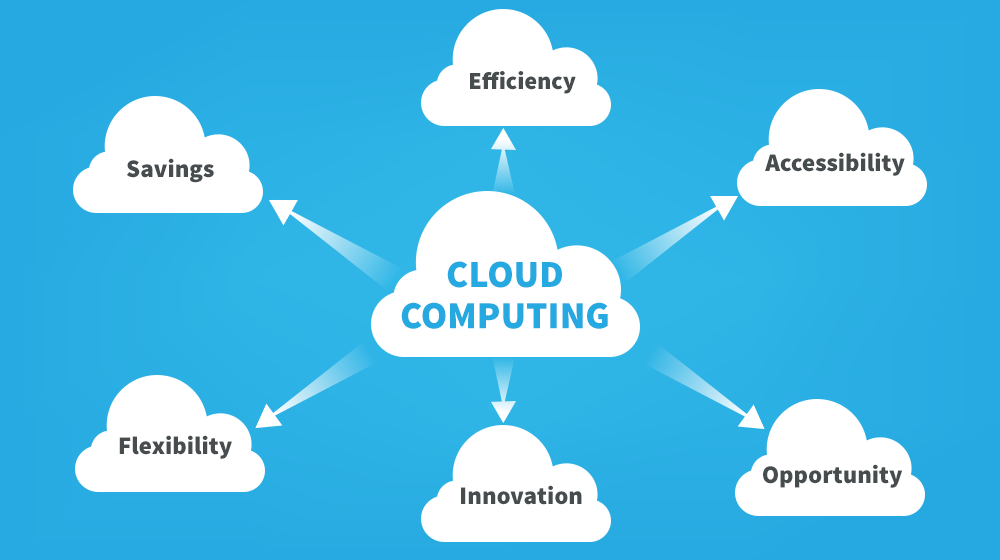
Cloud computing has revolutionized the way organizations manage technology, enabling businesses of every size to access powerful computing resources without investing heavily in physical infrastructure. Instead of maintaining expensive servers and data centers, companies can rely on cloud computing to securely store data, run applications, and support daily operations through internet-based services.
Today, cloud computing has become a critical part of digital transformation. It offers businesses greater flexibility, scalability, and cost efficiency while allowing teams to collaborate from virtually anywhere. Whether you’re a startup or a global enterprise, understanding the value of cloud technology is essential for making informed IT decisions and supporting long-term business growth.
Definition of Cloud Computing
Cloud computing is the delivery of computing services—including servers, storage, databases, networking, software, analytics, and artificial intelligence—over the internet, commonly referred to as “the cloud.”
Rather than purchasing, installing, and maintaining their own hardware, organizations can access cloud computing solutions from third-party providers whenever they need them.
How Cloud Computing Works
Instead of relying on traditional on-premises infrastructure, businesses use cloud-based platforms to access computing resources through a secure internet connection.
These services typically include:
- Cloud storage
- Virtual servers
- Database management
- Networking services
- Software applications
- Security solutions
- Data analytics
- Backup and disaster recovery
This cloud-based approach allows businesses to access enterprise-grade technology without the significant upfront investment associated with traditional IT infrastructure.
Why Businesses Are Moving to the Cloud
As technology continues to evolve, more organizations are adopting cloud services to improve operational efficiency and remain competitive.
Cloud allows businesses to:
- Scale resources quickly
- Reduce infrastructure costs
- Improve flexibility
- Increase productivity
- Support remote work
- Accelerate innovation
Rather than managing physical hardware, businesses can focus on growth while cloud providers handle the underlying infrastructure.
Key Benefits of Cloud Computing

Cloud computing offers numerous benefits that help organizations become more agile, productive, and cost-effective. From reducing operational expenses to improving collaboration and data security, cloud technology has transformed how businesses operate in today’s digital economy.
Improved Scalability and Flexibility
One of the greatest advantages of cloud computing is scalability.
Cloud allows organizations to increase or decrease computing resources based on changing business needs, ensuring they always have access to the right level of performance without overinvesting in hardware.
Whether experiencing seasonal demand or rapid business growth, cloud platforms support flexible resource allocation that adapts in real time.
Cost Savings and Operational Efficiency
Cloud computing significantly reduces IT costs by eliminating the need for expensive hardware purchases, software maintenance, and infrastructure upgrades.
Instead of paying large upfront costs, organizations typically pay only for the services they use.
This model provides several financial benefits:
- Lower capital expenditure
- Reduced maintenance costs
- Predictable monthly expenses
- Improved resource utilization
- Lower energy consumption
By reducing infrastructure management, computing reduces operational complexity and frees IT teams to focus on strategic initiatives.
Enhanced Collaboration
One of the most valuable advantages of modern cloud platforms is their ability to improve teamwork across departments and locations.
Cloud computing enhances collaboration by providing employees with secure access to applications, documents, and data in the cloud from virtually anywhere.
Whether teams work remotely, in hybrid environments, or across multiple offices, cloud collaboration tools enable employees to:
- Share files instantly
- Collaborate on projects in real time
- Access business applications securely
- Improve communication
- Increase productivity
Cloud computing enhances collaboration by providing centralized access to shared resources, helping organizations work more efficiently regardless of location.
Increased Business Agility
Cloud computing can help businesses respond quickly to changing market conditions.
Instead of waiting weeks or months to deploy new infrastructure, organizations can launch applications and services within minutes.
This agility enables companies to:
- Introduce new products faster
- Expand into new markets
- Support digital transformation
- Improve customer experiences
The flexibility offered by cloud technology helps organizations remain competitive in rapidly changing industries.
Better Security and Business Continuity
Leading cloud providers invest heavily in cybersecurity technologies, data encryption, monitoring systems, and compliance certifications.
Modern cloud computing solutions include features such as:
- Automatic backups
- Disaster recovery
- Identity management
- Multi-factor authentication
- Continuous monitoring
- Threat detection
These capabilities help protect critical business information while improving resilience during unexpected disruptions.
Organizations that rely on cloud services also benefit from built-in redundancy and faster disaster recovery compared to traditional infrastructure.
Cloud Computing for Small Businesses

Cloud technology has leveled the playing field for small businesses by providing affordable access to enterprise-grade technology.
Previously, advanced IT infrastructure was available primarily to large organizations with significant budgets. Today, cloud computing solutions make these capabilities accessible to businesses of every size.
Enterprise Technology Without Enterprise Costs
Small businesses can now access:
- Business applications
- Secure cloud storage
- Customer relationship management systems
- Collaboration software
- Accounting platforms
- Security solutions
These services offer businesses advanced capabilities without requiring expensive in-house infrastructure.
Supporting Business Growth
As businesses grow, cloud platforms support expansion by allowing organizations to increase computing resources whenever demand changes.
Instead of replacing hardware or building new data centers, businesses simply upgrade their cloud services as required.
This flexibility makes cloud technology ideal for companies experiencing rapid growth or seasonal fluctuations.
Remote Work and Collaboration
Cloud computing has become an essential tool for supporting modern workplaces.
Employees can securely access applications and information from any location, improving flexibility while maintaining productivity.
Cloud gives businesses the ability to:
- Support remote teams
- Enable hybrid work
- Improve collaboration
- Increase employee mobility
- Access files securely from multiple devices
These capabilities help organizations operate efficiently regardless of where employees are located.
Maximizing the Value of Cloud Computing

Successfully adopting cloud technology requires careful planning and alignment with organizational objectives.
Before migrating workloads, businesses should evaluate:
- Current infrastructure
- Security requirements
- Compliance obligations
- Budget considerations
- Long-term growth plans
- Performance requirements
Selecting the right cloud strategy ensures organizations maximize the value of cloud investments while minimizing risks.
Whether choosing public, private, or hybrid cloud environments, businesses should evaluate solutions that align with their unique operational goals and future expansion plans.
As digital transformation continues to accelerate, more organizations will rely on cloud computing to improve efficiency, increase innovation, and support sustainable growth. Cloud computing can help businesses become more agile, reduce operating costs, and provide businesses with the ability to adapt quickly in an increasingly competitive marketplace.
For organizations looking to modernize their operations, cloud technology isn’t simply an IT upgrade—it has become a strategic business advantage that empowers companies to innovate faster, collaborate more effectively, and respond confidently to evolving customer demands.
Types of Cloud Solutions
Cloud computing has become an essential part of modern business operations, transforming the way organizations store data, deploy applications, and manage IT infrastructure. Rather than relying solely on traditional computing models that require expensive on-premises hardware, businesses can now use cloud technologies to access powerful computing resources through a secure internet connection.
Today, cloud computing is a term used to describe the delivery of computing services—including servers, cloud storage, databases, networking, analytics, and software—over the internet. Cloud computing enables organizations to scale quickly, reduce infrastructure costs, and improve collaboration while only paying for the resources they use.
Understanding the different cloud deployment models is essential when choosing the right cloud strategy. Each model offers unique advantages depending on your organization’s size, security requirements, compliance needs, and long-term business goals.
Public Cloud Services
Public cloud services are the most widely used cloud computing model. In this environment, a third-party cloud provider owns, manages, and maintains the entire cloud infrastructure while delivering cloud computing services over the internet.
Businesses simply access the services they need through an internet connection, eliminating the need to purchase and maintain expensive physical servers or data centers.
Major providers such as Google Cloud Platform, Microsoft Azure, and Amazon Web Services have made public cloud computing accessible to businesses of every size.
How Public Cloud Works
With a public cloud, organizations share a highly secure infrastructure while maintaining complete separation of their own data and applications.
Cloud services give businesses access to:
- Virtual servers
- Cloud storage
- Databases
- Networking
- Artificial intelligence services
- Cloud analytics
- Application hosting
- Backup and disaster recovery
Because cloud computing uses a pay-as-you-go pricing model, companies only pay for the resources they consume rather than investing in costly infrastructure upfront.
Benefits of Public Cloud Computing
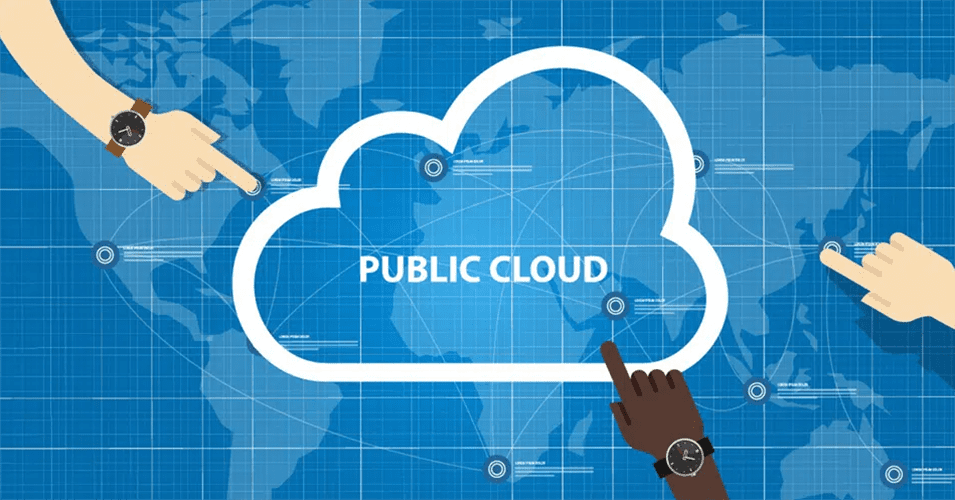
Public cloud computing offers numerous benefits for businesses looking to increase flexibility and reduce IT costs.
Some of the biggest advantages include:
- Lower infrastructure costs
- Rapid deployment of applications
- Automatic software updates
- High scalability
- Global accessibility
- Improved business continuity
- Reduced maintenance requirements
Instead of maintaining hardware, businesses can simply use cloud platforms to deploy and scale workloads whenever demand changes.
This model is particularly attractive because organizations only pay for the cloud resources they use, making it easier to manage budgets while supporting business growth.
Ideal Use Cases
Public cloud services are ideal for:
- Website hosting
- Software development
- Cloud-based applications
- Collaboration tools
- File sharing
- Data backup
- Remote work environments
As public cloud spending continues to grow worldwide, more organizations are choosing public cloud platforms to accelerate digital transformation.
Private Cloud Solutions

A private cloud provides dedicated computing resources for a single organization rather than sharing infrastructure with other businesses.
This environment can be hosted within a company’s own data center or managed by a third-party provider while remaining exclusively available to one organization.
Private cloud solutions are commonly used by businesses with strict regulatory requirements, sensitive customer information, or complex security needs.
Greater Control and Security
One of the primary advantages of private cloud computing is the increased level of control over infrastructure and data.
Organizations can customize:
- Security policies
- Access controls
- Compliance requirements
- Network configurations
- Storage architecture
- Performance settings
This level of customization makes private cloud solutions ideal for industries such as healthcare, finance, legal services, and government.
Security in the cloud remains a top priority, and private environments provide additional safeguards for confidential business information and customer data.
Improved Performance
Because computing resources are dedicated to a single organization, private clouds often provide:
- Higher performance
- Greater reliability
- Predictable workloads
- Enhanced application responsiveness
Organizations that rely on mission-critical applications frequently choose private cloud infrastructure to ensure maximum availability and performance.
Enterprise Cloud Solutions
Many large organizations implement enterprise cloud solutions using private cloud technology to support complex business operations.
These environments provide businesses with the ability to:
- Manage sensitive workloads
- Maintain regulatory compliance
- Improve disaster recovery
- Protect information stored in the cloud
- Support long-term digital transformation
Hybrid Cloud Advantages
A hybrid cloud combines both public and private cloud environments, allowing organizations to move data and applications between the two as needed.
This approach gives businesses the flexibility to store sensitive information in a secure private cloud while using public cloud services for less critical workloads and scalable computing resources.
For many organizations, hybrid cloud represents the perfect balance between performance, security, and cost.
The Best of Both Worlds
Hybrid cloud computing allows businesses to:
- Store sensitive data in private environments
- Run customer-facing applications in the public cloud
- Scale workloads during peak demand
- Improve disaster recovery capabilities
- Reduce infrastructure costs
This flexibility helps businesses adapt quickly as operational needs evolve.
Improved Business Continuity
One of the greatest benefits of the cloud is improved resilience.
Organizations can replicate critical systems across multiple cloud environments, reducing downtime and improving recovery after unexpected disruptions.
Cloud computing supports business continuity by ensuring applications and data remain accessible from virtually anywhere with an internet connection.
Flexible Cloud Migration
Hybrid environments also simplify cloud migration.
Instead of moving every application simultaneously, businesses can gradually transition workloads while minimizing disruption.
This phased cloud journey allows organizations to evaluate performance, reduce risks, and optimize costs throughout the migration process.
Emerging Cloud Computing Technologies

Cloud computing continues to evolve rapidly as new technologies reshape how organizations deploy and manage digital infrastructure.
Serverless Computing
Serverless computing allows developers to build and deploy applications without managing servers.
Cloud providers automatically allocate computing resources based on demand, allowing businesses to focus entirely on application development.
Benefits include:
- Reduced infrastructure management
- Faster deployment
- Lower operating costs
- Automatic scaling
Cloud Analytics
Modern cloud analytics platforms help organizations transform massive amounts of business data into valuable insights.
These tools allow businesses to:
- Monitor performance
- Predict customer behavior
- Improve decision-making
- Optimize operations
Cloud computing makes advanced analytics accessible to organizations without requiring expensive on-premises infrastructure.
Edge Computing
As connected devices continue to grow, edge computing is becoming increasingly important.
Instead of processing data in centralized cloud data centers, edge computing processes information closer to where it is generated.
This reduces latency and improves performance for:
- Internet of Things (IoT) devices
- Smart manufacturing
- Autonomous vehicles
- Healthcare monitoring
- Industrial automation
Edge computing works alongside cloud computing rather than replacing it, creating faster and more responsive digital services.
Quantum Computing
Although still developing, quantum computing has the potential to revolutionize cloud technology in the future.
Cloud providers are already investing in quantum research, enabling businesses to explore this emerging technology through cloud-based platforms without purchasing specialized hardware.
Cost Savings and Scalability

Cost Benefits of Cloud Adoption
Cloud adoption offers significant cost savings, which is one of the primary advantages of cloud computing for businesses. By moving to the cloud, organizations can eliminate the need for substantial upfront investments in hardware and physical infrastructure, reducing capital expenditures. The pay-as-you-go model for cloud services ensures that businesses only pay for the computing resources they actually consume, leading to optimized operational expenses. This financial benefit, combined with reduced maintenance costs and lower energy bills associated with on-premise data centers, makes cloud computing an attractive proposition for businesses aiming to enhance their bottom line and achieve substantial cost savings.
Scalability in Cloud Computing
Scalability is a critical advantage of cloud computing, allowing businesses to effortlessly adjust their computing resources to meet fluctuating demands. Cloud computing allows businesses to rapidly scale up their server capacity during peak periods and then scale down during quieter times, ensuring optimal performance without over-provisioning or under-provisioning. This inherent flexibility provided by a robust cloud platform means that businesses can efficiently manage their workloads, accommodating sudden spikes in traffic or data processing needs. This dynamic scalability not only optimizes resource utilization but also contributes significantly to cost savings by eliminating the need for expensive, unused hardware.
Impact on Business Growth
The combination of cost savings and unparalleled scalability has a profound impact on business growth. Cloud computing provides businesses with the agility to innovate and expand without the traditional constraints of physical infrastructure. By leveraging cloud services, businesses can quickly deploy new applications, test new markets, and expand their geographic reach with minimal overhead. This enables faster time-to-market for new products and services, giving businesses a competitive edge. The ability to efficiently manage resources and costs through cloud adoption empowers organizations to invest more in core competencies and strategic initiatives, fostering sustainable business growth and long-term success.
Cloud Migration and Business Continuity

Steps to Cloud Migration
Cloud migration involves a strategic process of moving an organization’s digital assets, services, databases, IT resources, and applications to the cloud environment of a cloud provider. This intricate process often begins with thorough planning and assessment of existing infrastructure, determining which cloud services are best suited for current and future needs. Businesses often leverage cloud migration strategies that prioritize critical applications, ensuring a smooth transition with minimal disruption to operations. Successfully moving to the cloud can unlock significant benefits of cloud computing, including enhanced scalability and substantial cost savings, fundamentally transforming the IT landscape.
Ensuring Business Continuity with Cloud Solutions
Ensuring business continuity is a paramount concern for any modern enterprise, and cloud solutions offer robust frameworks to achieve this. Cloud computing provides businesses with advanced disaster recovery capabilities, enabling rapid data backup and restoration in the event of unforeseen outages or cyberattacks. By distributing data across multiple data centers and leveraging the inherent resilience of a global cloud infrastructure, cloud providers offer unparalleled protection against data loss and service interruption. This robust approach to disaster recovery significantly enhances the overall business continuity strategy, ensuring critical operations can resume swiftly, minimizing downtime and protecting revenue streams.
Managed Cloud Services
Managed cloud services are crucial for businesses seeking to maximize the advantages of cloud computing without the burden of in-house management. A managed cloud service provider handles all aspects of the cloud environment, including infrastructure management, security, monitoring, and optimization. This allows businesses to focus on their core competencies while benefiting from expert oversight of their cloud platform. For organizations engaging in cloud adoption, particularly small businesses, managed cloud can provide access to enterprise-grade expertise and support, ensuring that their cloud solutions are performing optimally, securely, and cost-effectively, thereby driving significant business growth.
Drawbacks and Considerations
Potential Drawbacks of Cloud Computing
While the benefits of cloud computing are extensive, there are potential drawbacks and considerations that businesses must address during cloud adoption. One concern relates to vendor lock-in, where reliance on a single cloud provider can make it challenging to switch services in the future, potentially limiting flexibility. Another consideration is data security and compliance, as moving sensitive information to a third-party cloud environment requires careful evaluation of the cloud provider’s security protocols and adherence to regulatory standards. Furthermore, unexpected cost overruns can occur if cloud services are not properly managed or optimized, diminishing anticipated cost savings.
Evaluating the Switch to Cloud Computing
Evaluating the switch to cloud computing requires a comprehensive assessment of an organization’s specific needs, existing infrastructure, and long-term strategic goals. Businesses must weigh the advantages of cloud computing, such as scalability and disaster recovery, against potential challenges like data sovereignty and the complexity of cloud migration. It is essential to conduct a thorough cost-benefit analysis, considering not just immediate cost savings but also the total cost of ownership over time. Careful planning and a clear understanding of what cloud computing provides are critical to ensuring a successful transition and realizing the full cloud computing benefits.
Mitigating Risks in Cloud Adoption
Mitigating risks in cloud adoption involves strategic planning and the implementation of robust security measures to protect the cloud environment. Businesses should thoroughly vet cloud providers, ensuring they meet stringent security and compliance requirements, particularly for sensitive data. Implementing a hybrid cloud strategy can help mitigate vendor lock-in by allowing flexibility across different cloud platforms. Additionally, continuous monitoring of cloud services and cost optimization strategies are vital to prevent unexpected expenses. By proactively addressing these considerations, businesses can effectively leverage cloud solutions while minimizing potential drawbacks, ensuring a secure and efficient move to the cloud.
